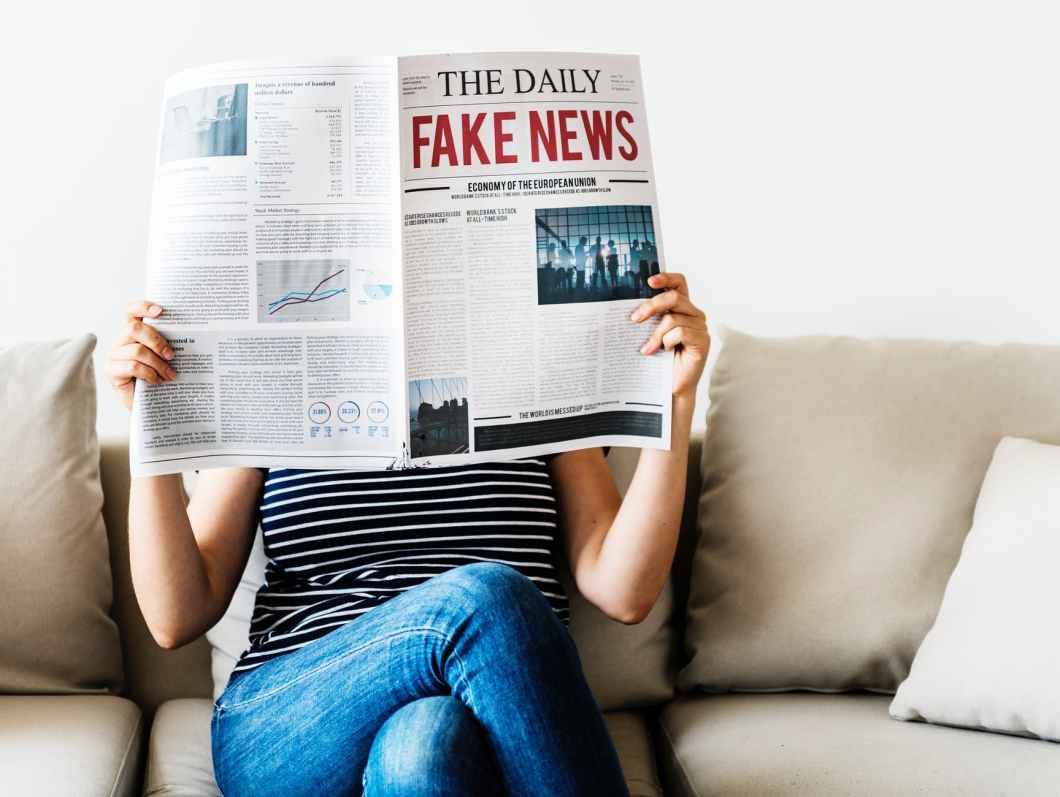
The spreading of fake information nowadays is extremely easy as anything that is posted online can reach, in a very short time, a huge amount of people who can share and discuss that information with their following and online connections. This problematic information which is usually referred to as “fake news”, falls into the category of either misinformation or disinformation. The difference between the two being whether the information was intentionally inaccurate or not. If the fake information was accidentally spread it is referred to as misinformation, whereas if it was purposefully done, we are talking about disinformation (Jack, 2017).
The reasoning for the spreading of “fake news” could be quite various, anything from an honest mistake to deliberately influencing peoples’ political views and persuasive marketing strategies. The question, however, is how has this phenomenon influenced peoples’ behaviour online and how has it shaped the digital society as a whole.
A research done by the Massachusetts Institute of Technology shows that false news, compared to true ones, are spread faster and wider through social media (Chadwick, 2018). Peoples’ emotional response and the level of novelty of the fake information being great factors for this difference. In many cases, fake news stories tend to go viral thanks to the high level of shock value provided by their “clickbait” titles that spark the users’ interest and curiosity.
Even though the high online traffic attracted by misleading information is apparent, it is hard to determine the impact it actually has on its readers. But as more attention is being brought to the “fake news” issue, it can be argued that the digital society is becoming more cautious and sceptical of the trustworthiness of online sources, therefore becoming more engaged in double-checking and researching the information instead of just taking it at face value.
References:
Chadwick, P (2018) Why fake news on social media travels faster than the truth [online], The Guardian [Viewed 30 December 2018]. Available from: https://www.theguardian.com/commentisfree/2018/mar/19/fake-news-social-media-twitter-mit-journalism
Jack, C (2017) Lexicon of Lie: Terms for Problematic Information [online], Data & Society [Viewed 30 December 2018]. Available from: https://datasociety.net/pubs/oh/DataAndSociety_LexiconofLies.pdf
 Anastasia Voynishka